How Hotels Get More TripAdvisor and Google Reviews
 By the RepuTap teamUpdated 3 min read
On this page
The short answer
- Check in with guests during their stay, not just after. A problem fixed on day one rarely ends up on TripAdvisor.
- Ask for the review at checkout, when the stay is complete and the guest is standing in front of you, then follow up by email the same day.
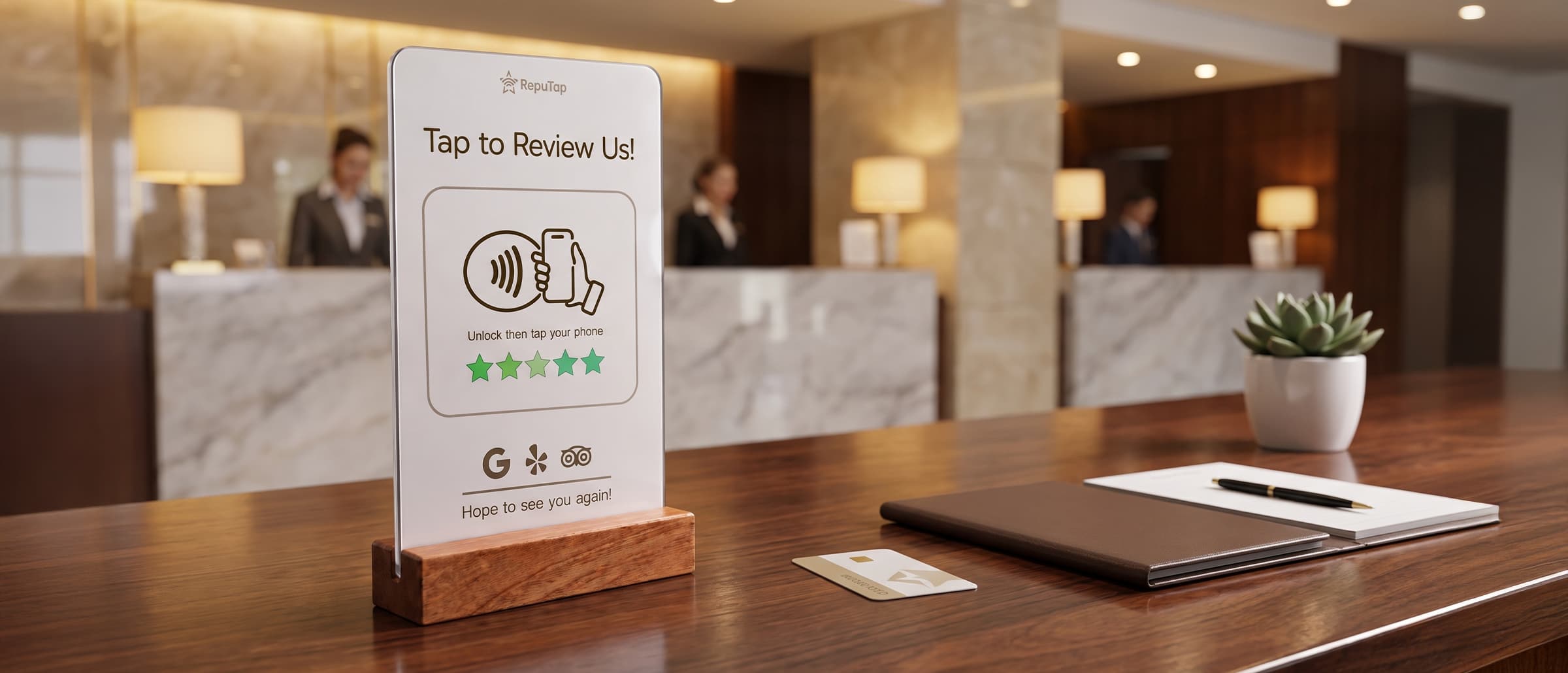
- Place tap stands at the front desk, and consider the bar, restaurant and in-room desk or nightstand.
- Both TripAdvisor and Google prohibit incentives and selectively asking only happy guests. TripAdvisor also bans staff contests and bonuses for reviews.
Why hotels have an advantage
Guests stay with you for a night or ten. That gives you time to catch and fix problems before checkout, and a natural moment to ask for a review when they leave. Travelers check both Google (where many trips start, on the map) and TripAdvisor, so ask for both.
Step 1: Catch problems mid-stay
Most bad hotel reviews describe a problem from the first night: noise, a broken AC, a dirty room. The guest didn’t report it, or reported it and nothing happened.
- Check in a few hours after arrival: “Is everything okay with your room?”
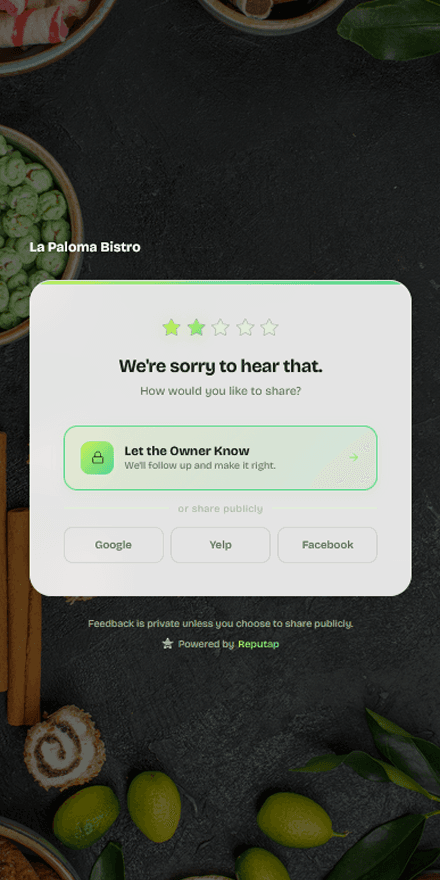
- Put a tap point in the room so guests can flag issues privately at any hour.
- Alert the duty manager instantly, not in Monday’s report.
A problem fixed on night one often becomes a review that says “they sorted it right away.”
Step 2: Ask at checkout, follow up by email
At checkout, point guests to the stand on the desk and ask for a quick review on Google or TripAdvisor. Then send every guest a short email the same day with both review links. Let guests choose the site. Some only use TripAdvisor, others only Google.
Where to place stands
| Location | Why |
|---|---|
| Front desk | The checkout ask |
| In-room desk or nightstand | Private feedback mid-stay, while it’s fixable |
| Restaurant and bar | Guests often rate these separately |
| Concierge desk | Right after a great recommendation |
Keep it clean
Both TripAdvisor and Google allow you to ask for reviews, but not to reward them: no upgrades, discounts or late checkout in exchange, no asking only happy guests, and no staff bonuses or contests for reviews.
How RepuTap helps
RepuTap covers both steps with the same stand. At the front desk, guests tap and pick Google or TripAdvisor. In the room, guests who have a problem can tell you privately, and your team gets an instant alert while the guest is still in the building. On the Pro plan, the review page carries your hotel’s own photo and logo.
Replying to reviews? See negative and positive reply examples.
Frequently asked questions
Can hotels offer upgrades or discounts for TripAdvisor reviews?
No. TripAdvisor prohibits incentives for reviews, including discounts, upgrades and special treatment, and Google prohibits incentives too. Reviews tied to incentives can be removed and properties can be penalized.
Can hotels reward staff for getting reviews?
TripAdvisor says bonuses or contests that reward employees for reviews or for being mentioned in reviews are against its guidelines. Google also prohibits review quotas for staff and asking guests to name staff members.
Is it OK to email guests asking for reviews after checkout?
Yes, as long as you ask all guests the same way rather than only the ones you think had a good stay. TripAdvisor even offers a free tool, Review Express, for sending review requests.
Should hotels focus on Google or TripAdvisor reviews?
Both. Many travelers compare hotels on Google Maps and in Google search, while TripAdvisor remains influential for leisure travel. Letting guests pick the site they prefer usually gets the most reviews overall.

RepuTap makes the RepuTap Stand, RepuTap Cards and feedback software for restaurants, salons, clinics, hotels, gyms and shops across the US. We write these guides from what we see working for the 80+ businesses that use RepuTap every day.
Keep reading
 Feedback & replies
How to prevent bad reviews
Most bad reviews start as a problem nobody heard about. How to catch unhappy customers before they leave, fix it fast, and stay within Google's rules.
 Feedback & replies
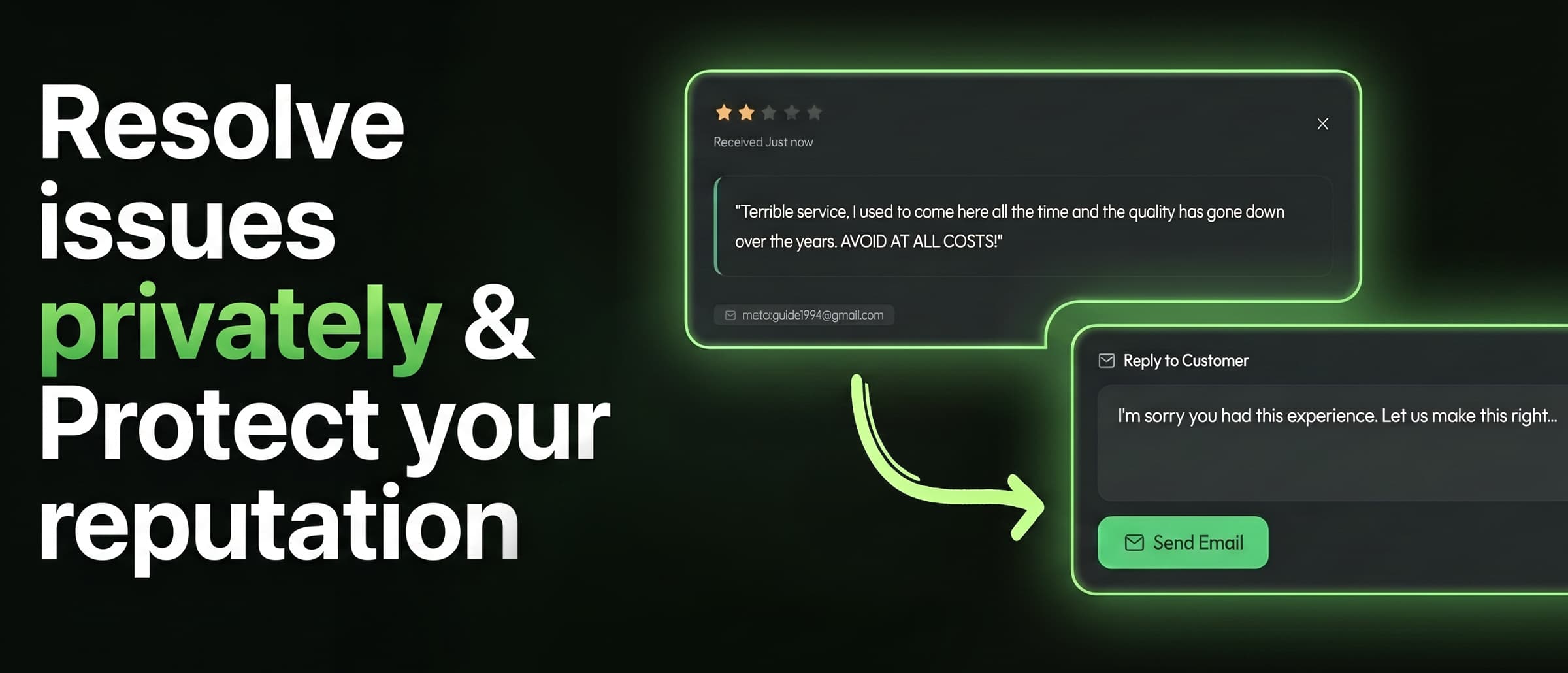
How to respond to negative reviews
A simple five-step formula for replying to bad reviews, real response examples, the mistakes that make it worse, and what to do about fake reviews.
 Getting reviews
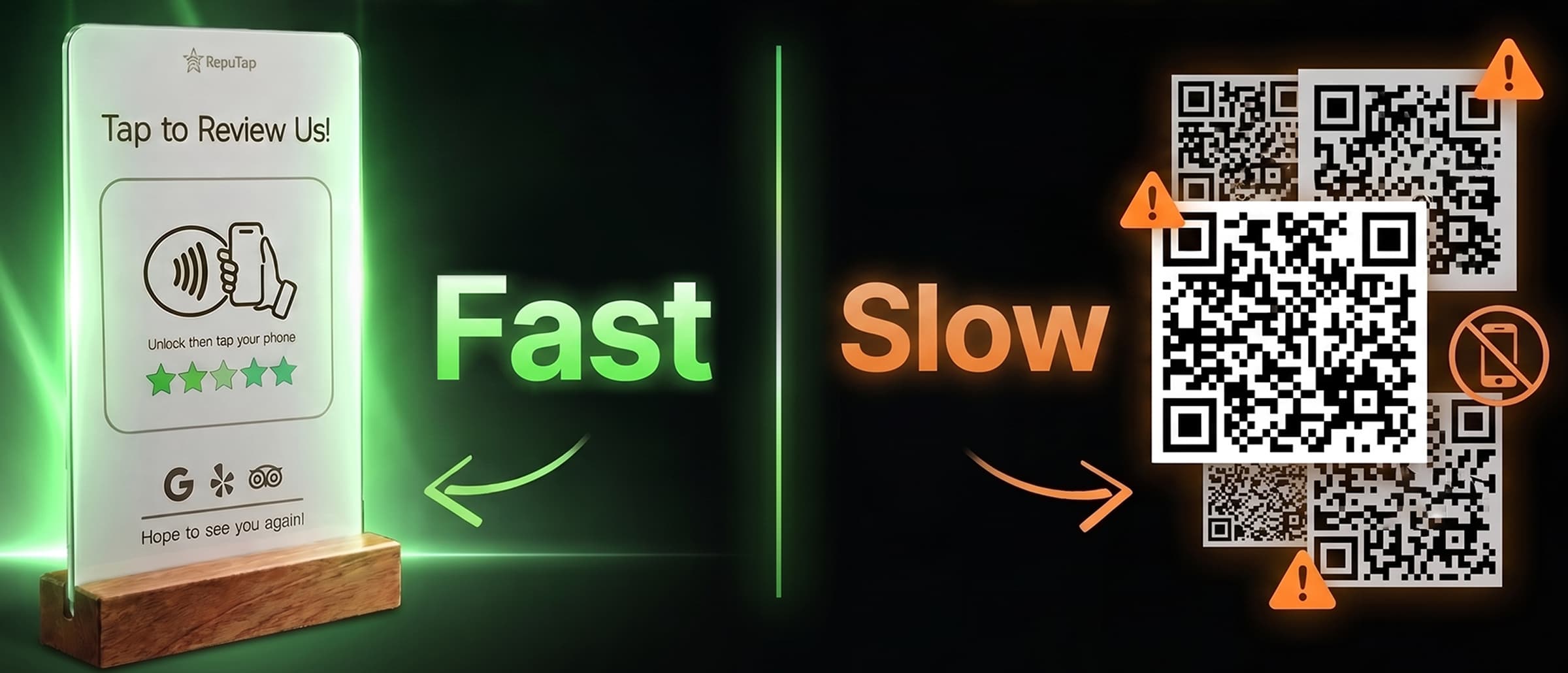
NFC vs. QR codes for reviews
NFC tap stands and QR codes both open your review page. We compare steps, speed, low-light use, phone support, cost and scam risk, and where each one wins.